SAN DIEGO AMATEUR WINEMAKING SOCIETY
March 2005
3-12-2005 SDAWS Meeting Agenda
Please Note: Fellow Society members - We would love to hear suggestions
about where to hold the May SDAWS picnic. There will be a sheet circulating.
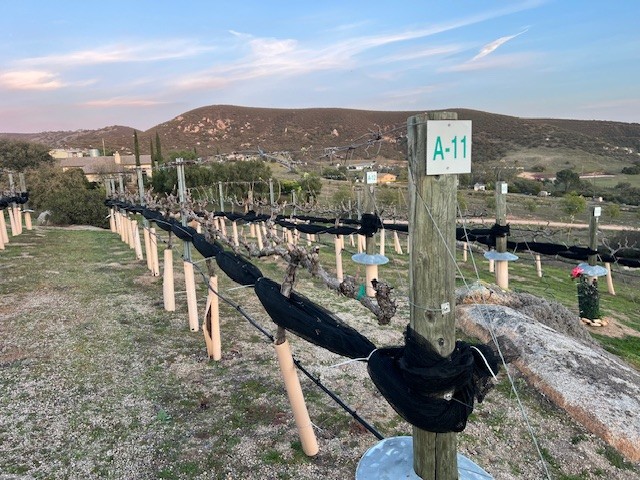
By the way, for those who are interested we are going to a Pre-meeting Fallbrook
Winery Tour @ 10:30 AM (please see http://sdaws.org/bulletin.htm).
Thanks, Lance G.
Meeting Location: Buffington's house, in Fallbrook, CA 92028 Information
and map are on the link: http://sdaws.org/about.htm
Meeting Hours: 12:30 to 4:00 PM
I. The introductions of new members and collection of wine for the drawing.
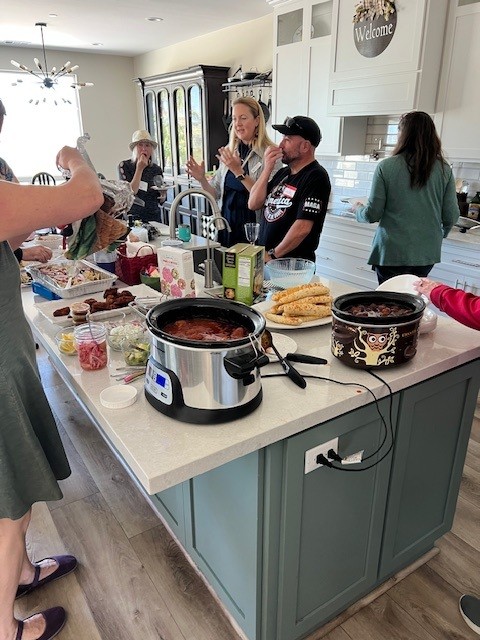
Please bring 2 bottles of wine, one for the wine raffle, one for the meeting.
Bring some appetizers if you desire. We always have a great selection. Thanks
to all... We will have ham & rolls. This is new.
Ancillary to our agenda, but kind of neat technical stuff: Handouts on Aeration
& Introduction of Toasted Oak @ Fermentation
Speakers:
I. Lum Eisenman, Winemaking Mentor
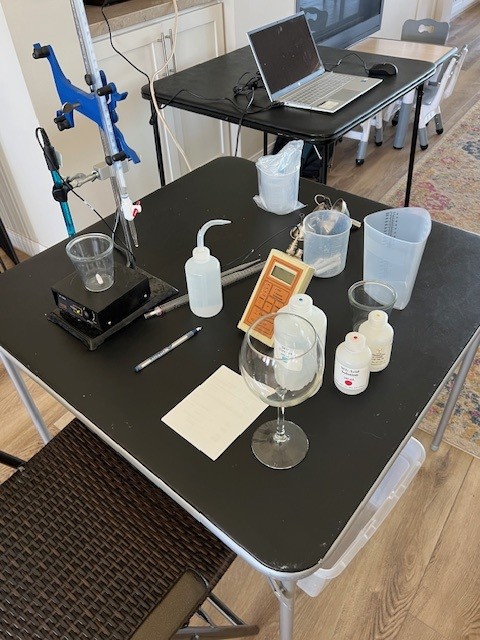
a) Identifying Faults in Wine & Some Solutions
II. Kathleen Valentini, Owner of Valentini's Custom Wine Cellars
a) The Art of Storing Wine
Wine Raffle
III. Rick Buffington, President, Cougar Vineyards & Winery
a) Tour of the Winery & explanation of equipment
IV. New Business:
a) Picnic date - 3rd weekend in May.
b) They are looking for volunteers: Wine Pour - San Diego Women's Council
(a good group) Summer Wine & Food Festival with Silent Auction Del Mar
Plaza. June 26, 2005. Contact Christine Loffredo at cloffredo@coh.org.
c) Does anyone any have news to submit for the newsletter? Please email jerrylapan@yahoo.com
and we can add it. Articles and information are best submitted in rich text
format.
d) Suggestions for future speakers.
e) Dues - $12.00 per household are due. If you have yet to pay, please send
a check made out to SDAWS to our faithful & hardworking treasurer, S Sgrosso:
3576 Nettle Place, Fallbrook, CA 92028. Thanks, all.
V. Open Floor
We are planning on finishing the meeting around 4:00 PM
On History: "A wine barrel is a cylindrical container usually
made from oak historically used for the storage and transportation of goods.
Today barrels are used almost exclusively in the production of fine wines
and spirits. The bulge, or bilge, of barrels means that they can be rolled
and spun easily, and that, when they are kept horizintal, any sediment naturally
collects in one place. This allows for easy removal of the solids from the
wine, or racking, during the wine making process.
The ancient Greeks and Italians seemed happy to ship their wines in rather
fragile amphorae. Although Herodotus refers to palm-wood casks being used to
carry Armenian wine to Babylon in Mesopotamia, it is generally accepted that
it was the iron age communities of Northern Europe, notably the Celts, who developed
the wooden barrel for large transport of goods.
The wine barrel is made up of staves shaped into a bulging cylinder, with hoops
around it, a flat circular head at both ends, and at least one hole, generally
on the belly, for a bung. Most barrels weigh between 125 lb. and 140 lb. empty
and approximately 600 lb. full of wine. 6 to 8 steel hoops are generally spaced
along the barrel length. Wineries can specify the placement of the end hoops
to either be at the contact point of the rack cradles or to be on either side
to allow for a bearing point of metal to oak.
Barrels used in the California wine industry are primarily of two main styles,
the 59 gallon French Bordeaux barrel and the 60 gallon French Burgundy. Early
American made barrels were 50 gallon capacity but current American barrels,
or cooperage, are constructed in the form of the traditional French Bordeaux
barrel. Much of the Whiskey industry still uses the 50 gallon barrels. The French
Bordeaux barrel is the most common found in California mainly due to tradition
and because of the added head-to-head length. The French Burgundy barrels were
designed for use in the narrow doorways of the cellars in the Burgundy region
of France. This style is still popular due to the added wine capacity and bilge
dimensions. All barrels are constructed of a typical white oak timber."
[ Note - For more please see: http://www.eresonant.com/pages/history/history-barrels.html
]