WHEN TO PICK IS THE MOST IMPORTANT DECISION
A WINEGROWER MAKES EACH YEAR
by
Lum Eisenman
Under-ripe red grapes are low in sugar, low in flavor, low in color and high
in acid. Wines made from under-ripe grapes can be overly tart because of the
excess amounts of acid, and these wines often have a herbaceous taste. Excess
acidity can be removed either biologically or chemically. But, any acid adjustments
should be done before fermentation is started and leaving the right amount of
acid can be tricky. For none commercial wines, sugar deficiencies can be easily
corrected by adding sucrose. In addition to acid and sugar problems, wines made
from under-ripe grapes are also overly herbaceous, have poor color, low flavor
intensity and lack varietal character. Mitigating flavor problems in wines made
from under-ripe grapes is difficult.
Ripe red grapes have the correct amount of sugar, acid, color, and good varietal
character and flavor intensity. Depending on variety, ripe red grapes may have
some herbaceous taste but they also show some "red fruit" flavors.
Overripe red grapes have high sugar levels, low acid, high color and excessive
"red fruit" flavors. Wine made from overripe grapes are high in alcohol,
and they can taste "flat" or bland because they are too low in acidity.
Acid deficiencies can be corrected by adding tartaric acid to the must prior
to fermentation. But, wines produced from overripe grapes often have "cooked
fruit" or prune flavors.
Sugar can be measured easily, so Brix has been a historic way of specifying
grape ripeness. Unfortunately, grapes from one vineyard may be ripe at 23 Brix,
while the same variety of grapes in a nearby vineyard may not be ripe until
they reach 25 Brix. So, contentious winemakers/winegrowers take into account
Brix plus several other parameters when making harvest decisions.
When to pick is such an important decision that most winegrowers start checking
their grapes well before harvest time. As harvest day approaches, the winegrower
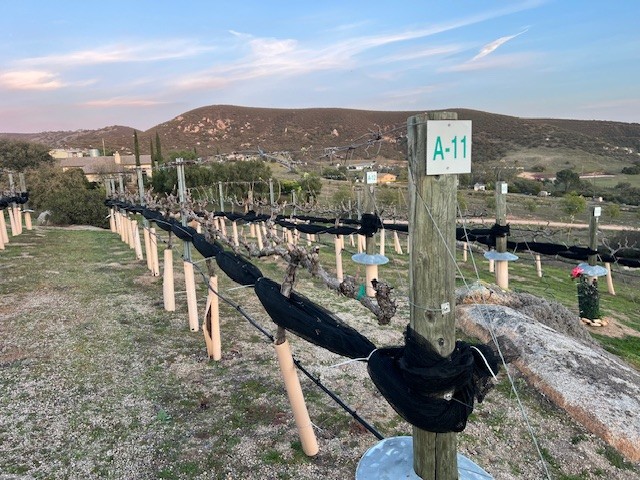
goes to the vineyard every few days to inspect the fruit. He looks at the condition
of the vineyard to see if the vines are strong enough to continue ripening the
grapes. Then the winegrower walks up and down the rows of vines. He picks grapes
one by one and carefully examines each berry.
In the later stages of ripening, the berries become softer. So, the winegrower
checks the berries by gently squeezing them between his thumb and forefinger
to see if they have started to soften.
Under-ripe grapes often have a heavy herbaceous smell and taste. Ripe grapes
have less herbaceous character and more plum and cherry character. So, the winegrower
tastes and smells the grapes to see if the herbaceous character has diminished
and if the red fruit character has started to develop.
The color of grape seeds changes from green to brown as the berries ripen. So,
the winegrower spits the seeds in his hand and looks to see if the seeds have
changed color. Some winegrowers will NOT pick red grapes until 80 to 90 percent
of the seeds are brown.
The winegrower then collects a "sugar sample" of a hundred or more
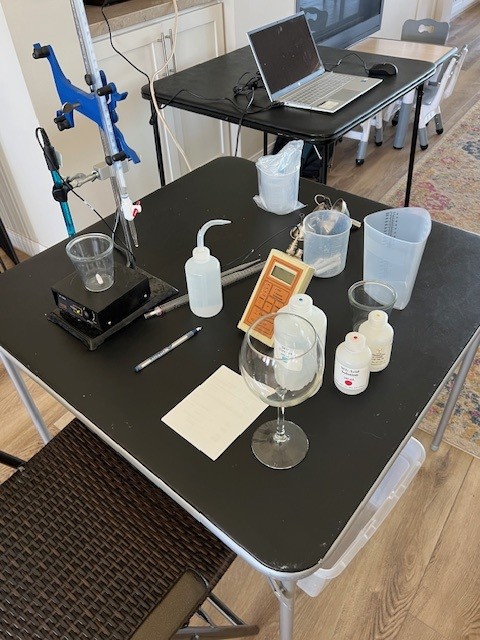
berries. Back at the winery, the Brix, TA and pH of the sample grapes are measured
and these data, together with the vineyard observations, are used to help the
winegrower decide when the grapes should be picked.
High quality wine can only be made from high quality, properly ripened grapes,
so this walking up and down the vineyard picking, squeezing, tasting and spitting
seeds is an annual, pre harvest ritual.