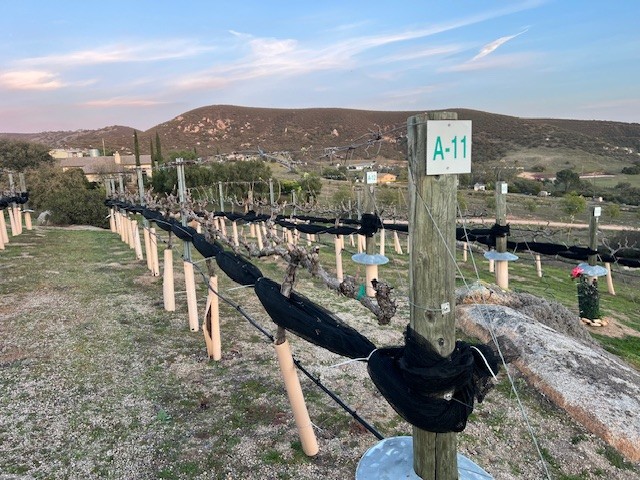
The SDAWS meeting was held at Tre Sorelle Vineyard in Ramona on April 05, 2025.
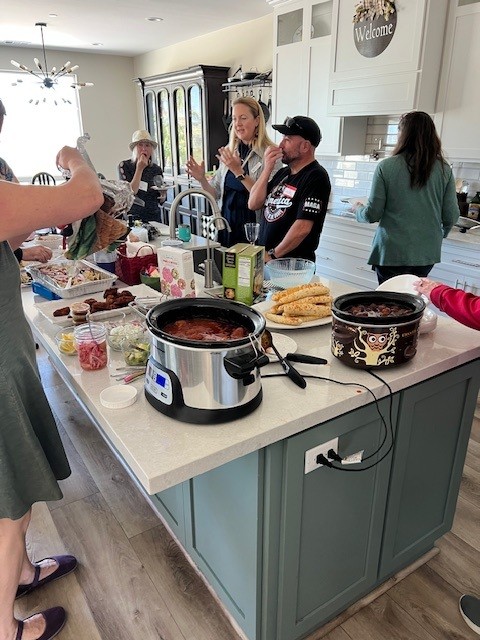
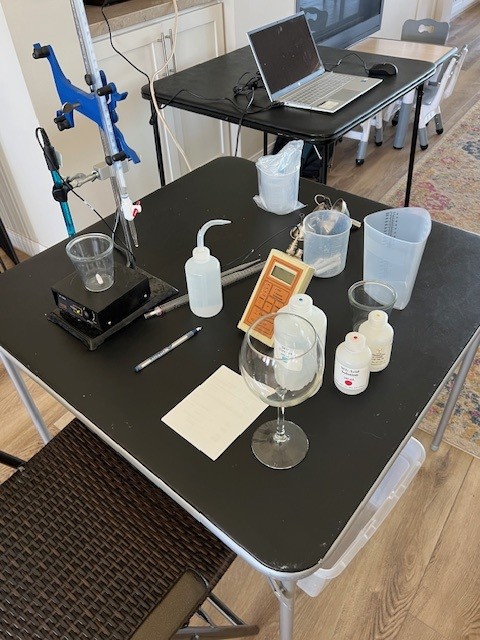
In the meeting, Dan led us through an active discussion regarding the use of sulfites in wine making and a demo of testing sulfites using the Vinmetrica titration method. This led to a winemaking and growing grapes discussion with the members that was very interactive. We had about 20 people in attendance. We had Kim Whalin come to the meeting to tell us about the upcoming RVVA wine competition and Patty brought up the San Diego County Fair competition in hopes of getting more of our members to participate this year. Following the meeting, the members shared their own homemade wines, and we had a marvelous potluck. Rob shared some information about his vineyard and grapes, noting that they are for sale.
We would like to thank Rob de la Grange for hosting and Lori Hardesty for sharing her lovely home with SDAWS for this meeting.
Note:
Our next meeting will be at Dan’s place, Monarch Hill Vineyard, June 07, 2025, 11:00 to 2:00. More details to come.